

Basement Drywall Installation in Spruce Grove, AB
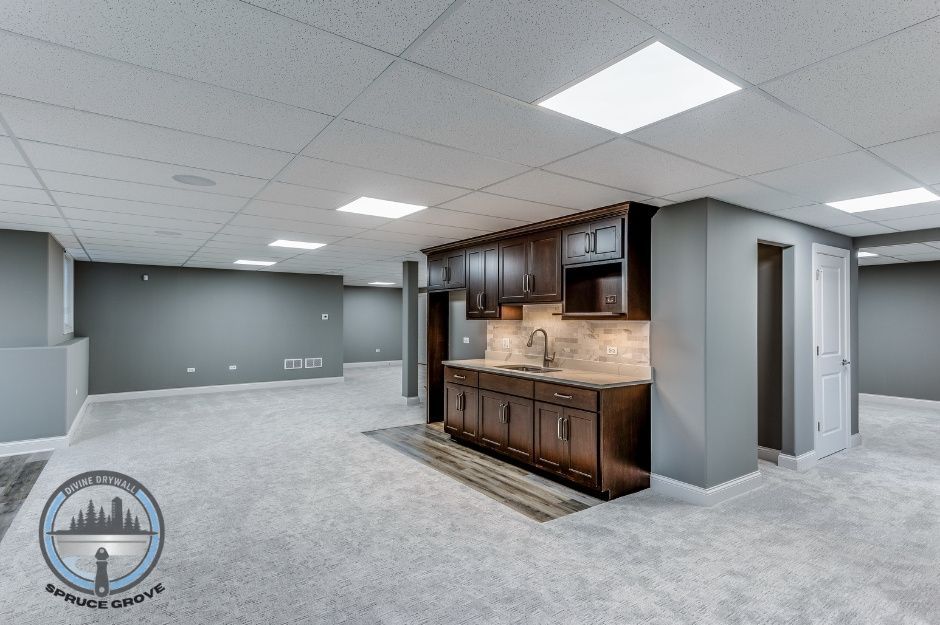
Finishing or renovating your basement requires more than standard drywall work—below-grade spaces face increased moisture, temperature fluctuations, and strict code requirements. At Divine Drywall Spruce Grove, we specialize in basement drywall installation that’s built specifically for Alberta’s climate. From moisture-resistant board systems to insulated wall assemblies and fire-rated materials for legal suites, we ensure your lower level is finished to the highest structural and safety standards.
Whether you're creating a basement suite, building a rec room, or completing a full lower-level renovation, our team handles everything from framing checks and vapor barriers to precision board hanging and seamless finishing. Every installation is done to meet local Spruce Grove building codes while delivering long-lasting performance and clean, professional results.
For top-tier basement installation services, contact Divine Drywall Spruce Grove at 587-415-5093 to schedule a consultation or request a detailed project estimate.
Divine Drywall Spruce Grove (SP)

Comprehensive Basement Installation Services
Divine Drywall Spruce Grove delivers complete basement installation solutions from initial framing to final finishing touches. Our services encompass wall and ceiling installations, specialized moisture-resistant materials, and insulated drywall systems designed for Spruce Grove's climate conditions.
Complete Basement Drywall Install Solutions
You receive end-to-end drywall installation services that transform your basement into functional living space. Our contractors handle every aspect of the installation process, from measuring and cutting materials to taping and finishing seams.
Full-service installations include:
- Material selection and procurement
- Surface preparation and priming
- Professional hanging techniques
- Seamless joint finishing
- Quality control inspections
Your basement renovation benefits from our systematic approach to drywall installation. We coordinate with existing framing structures and ensure proper alignment with electrical and plumbing systems.
Each project receives customized attention based on your specific requirements. Whether you're creating a rec room, basement suite, or utility room, our installation process adapts to your space's unique dimensions and intended use.
Professional Basement Wall Installation
Your basement walls require specialized installation techniques that address structural and environmental challenges. We install drywall panels using appropriate fastening methods that account for concrete foundations and steel framing systems.
Wall installation specifications:
Wall Type Material Thickness Application
Interior Partition Standard Drywall 1/2" Rec rooms, bedrooms
Exterior Foundation Moisture-Resistant 5/8" Against concrete walls
Load-Bearing Fire-Rated 5/8" Structural applications
Our contractors ensure proper spacing between panels and foundation walls. This technique prevents moisture transmission and allows for natural settling without cracking.
You benefit from our understanding of Spruce Grove building codes and basement-specific requirements. We install walls that meet local standards while providing long-term durability.
Expert Basement Ceiling Installation
Your basement ceiling installation requires careful planning around existing mechanical systems and structural elements. We navigate around ductwork, plumbing, and electrical components while maintaining proper clearance heights.
Our ceiling installation process accommodates different basement layouts and ceiling heights. We use appropriate hanging systems that distribute weight evenly across joists and beams.
Ceiling installation features:
- Suspended systems for easy access to utilities
- Direct attachment for maximum ceiling height
- Acoustic properties for sound control
- Fire-rated assemblies where required by code
You receive professional installation that integrates seamlessly with your basement's existing infrastructure. Our contractors coordinate with other trades to ensure all systems work together effectively.
Insulated and Moisture-Resistant Basement Drywall
Your basement installation includes specialized materials designed for below-grade environments. We install insulated drywall systems that improve energy efficiency and prevent condensation issues common in Spruce Grove basements.
Moisture-resistant board installation protects your investment from humidity and potential water intrusion. These materials feature enhanced core formulations that resist mold growth and maintain structural integrity in damp conditions.
Insulation and moisture protection includes:
- Vapor barrier installation
- Rigid foam backing systems
- Moisture-resistant gypsum board
- Proper ventilation integration
Our contractors select appropriate materials based on your basement's specific moisture conditions. We assess existing drainage and ventilation systems to determine optimal installation methods.
You receive basement panel installation that addresses thermal bridging and creates comfortable living temperatures year-round. This approach reduces heating costs while preventing condensation problems that damage conventional drywall systems.
Specialized Board and Panel Installations
Basement installations require specific board types and mounting techniques to handle moisture, temperature changes, and structural requirements. Professional installation methods ensure long-term durability and proper integration with existing framing systems.
Framed Basement Board Installations
Proper framing preparation creates the foundation for successful drywall installation in your basement. Your contractor will inspect existing studs for spacing, typically 16 or 24 inches on center, and verify structural integrity before beginning board attachment.
Standard installation process includes:
- Measuring and cutting boards to fit between floor joists
- Securing panels with appropriate fasteners for your framing material
- Maintaining consistent spacing between fasteners
- Checking for plumb and level alignment
The installation starts with ceiling panels, followed by wall sections. Your installer will work systematically to minimize waste and ensure proper joint alignment. Each board requires precise cutting around obstacles like electrical boxes, plumbing, and HVAC components.
Framing modifications may be necessary to accommodate electrical or plumbing updates during your basement renovation. Additional blocking between studs provides secure attachment points for heavy fixtures or cabinets you plan to install later.
Moisture-Resistant Board Solutions
Basement environments demand specialized moisture-resistant materials to prevent mold growth and structural damage. Green board and cement backer board offer superior protection compared to standard drywall in high-humidity areas.
Moisture-resistant options include:
Board Type Best Use Moisture Rating
Green Board General basement areas Moderate resistance
Cement Board Near water sources High resistance
Mold-resistant drywall Living spaces Enhanced protection
Your installation requires proper vapor barriers behind the board in exterior wall applications. Sealing all joints and penetrations prevents moisture infiltration that can compromise your basement's structural integrity.
Proper ventilation planning works alongside moisture-resistant materials. Your contractor will coordinate with HVAC professionals to ensure adequate air circulation throughout the finished space.
Basement Panel Installation Methods
Panel installation techniques vary based on your basement's intended use and existing conditions. Mechanical fasteners, adhesives, or combination methods secure panels to framing while accommodating potential settling or movement.
Installation considerations include:
- Fastener selection: Screws provide superior holding power compared to nails
- Spacing requirements: Proper gaps allow for thermal expansion
- Joint treatment: Tape and compound application for seamless finish
Your installer will adjust techniques for different panel weights and sizes. Larger panels require additional support during positioning and fastening. Corner installations need precise measurements to ensure tight joints and professional appearance.
Electrical rough-in coordination happens before panel installation. Your contractor will verify all wiring, outlets, and switches are properly positioned and inspected before covering with panels.
Basement Suite and Room-Specific Drywalling
Different basement spaces require specialized drywall approaches based on their intended function, moisture exposure levels, and building code requirements. Professional installation ensures each room meets safety standards while providing optimal performance for residential or rental use.
Basement Suite Drywall Services
Creating a legal basement suite requires adherence to specific building codes and fire safety regulations. Your drywall installation must include proper fire-rated materials between living units and common areas.
Fire-Rated Drywall Requirements:
- 5/8-inch Type X drywall for shared walls
- Double-layer installation for enhanced fire resistance
- Proper sealing around electrical outlets and fixtures
Basement renovation contractors must install soundproofing materials behind drywall to reduce noise transfer between floors. This includes resilient channels and acoustic insulation that dampen sound transmission.
Moisture control becomes critical in suite installations. Vapor barriers and moisture-resistant drywall protect against humidity buildup from cooking, bathing, and daily activities.
Rec-Room Drywall Installation
Recreation rooms demand drywall that withstands higher activity levels and potential impact damage. Standard 1/2-inch drywall works for most rec-room applications, but high-traffic areas benefit from thicker materials.
Your rec-room installation should account for entertainment equipment mounting points. Contractors reinforce specific wall sections with blocking or metal studs where televisions, speakers, or gaming equipment will attach.
Rec-Room Considerations:
- Impact-resistant drywall for play areas
- Smooth finish for easy cleaning
- Proper joint compound application to prevent cracking
Ceiling installations require special attention to prevent sagging over large spans. Metal furring strips or additional framing support heavier drywall sheets in open rec-room layouts.
Utility Room Drywall Solutions
Utility rooms face unique challenges from mechanical equipment vibrations, temperature fluctuations, and higher humidity levels. Moisture-resistant drywall becomes essential near water heaters, furnaces, and laundry equipment.
Your utility room walls need clearances around mechanical equipment for maintenance access. Contractors plan drywall placement to meet manufacturer specifications while maintaining clean finished appearances.
Utility Room Specifications:
- Moisture-resistant board near water sources
- Fire-rated materials around furnace areas
- Removable access panels for equipment service
Proper ventilation coordination ensures drywall installation doesn't interfere with HVAC ducts or electrical panels. Strategic planning prevents future renovation needs when equipment requires service.
Lower-Level Board Hanging Techniques
Lower-level installations require specialized hanging techniques to address foundation settling, moisture migration, and thermal expansion. Your drywall system must accommodate building movement without cracking.
Contractors use floating corner techniques that allow slight movement between wall and ceiling joints. This prevents stress cracks that commonly develop in basement environments.
Professional Hanging Methods:
- Bottom plate clearance for moisture protection
- Expansion joints at long wall runs
- Proper fastener spacing for concrete block walls
Adhesive application combined with mechanical fasteners provides superior holding power in basement conditions. This dual-attachment method prevents board sagging and ensures long-term performance in challenging below-grade environments.
Commercial and Assembly Basement Projects
Commercial basement projects require specialized drywall installation techniques that differ significantly from residential applications. Assembly-line processes and systematic renovation approaches ensure efficient completion while maintaining professional standards throughout the installation.
Commercial Basement Drywall Applications
Commercial basement drywall installations demand moisture-resistant materials and fire-rated assemblies to meet building codes. You need Type X or Type C drywall for fire resistance in commercial spaces. These applications typically involve larger square footage and require coordinated scheduling with other trades.
Key commercial requirements include:
- Fire-rated wall assemblies (1-hour or 2-hour ratings)
- Moisture-resistant board in high-humidity areas
- Sound-dampening installations for noise control
- Accessibility compliance for ADA requirements
Commercial projects often feature exposed ceilings or suspended grid systems. You must coordinate with HVAC, electrical, and plumbing contractors before beginning drywall installation. The installation process requires larger crews and specialized equipment for handling commercial-grade materials.
Basement Assembly Installation Processes
Assembly installation follows a systematic approach that maximizes efficiency and quality control. You start with precise measurements and material calculations to minimize waste. Pre-cutting materials off-site reduces installation time and improves job site safety.
The assembly process begins with framing inspection and continues through these stages:
Stage Duration Key Tasks
Preparation 1 day Material delivery, setup
Hanging 2-3 days Board installation, cutting
Finishing 4-5 days Taping, mudding, sanding
You must maintain consistent joint spacing and proper fastener patterns. Each panel requires specific attachment methods based on wall height and load requirements. Quality control checkpoints occur after each major phase.
Renovation Drywall Install Best Practices
Basement renovation projects require careful evaluation of existing conditions before installation begins. You need to address moisture issues, structural concerns, and code compliance before hanging new drywall. Insulated basement drywall installations require vapor barriers and proper thermal bridging techniques.
Best practices for basement reno include moisture testing and remediation. You should install moisture-resistant board in areas prone to humidity. Proper ventilation systems must be operational before drywall installation begins.
Renovation work often involves matching existing textures and finishes. You need to blend new installations seamlessly with remaining original surfaces. This requires skilled finishing techniques and compatible materials.
Basement Finishing and Completion
Professional basement finishing involves multiple coating applications and texture matching. You apply primer, base coats, and final finishes according to manufacturer specifications. Rec-room drywall install projects typically require smooth Level 4 finishes for painting.
Final inspections cover joint visibility, surface smoothness, and corner alignment. You must address any imperfections before paint application. Basement suite drywall installations require additional fire-stopping and sound control measures.
Completion timelines depend on project scope and drying conditions. You should allow adequate cure time between coating applications. Proper lighting during finishing phases ensures consistent results throughout the basement space.
